Updated: 26 October 2026
By Rod Genders | Genders and Partners
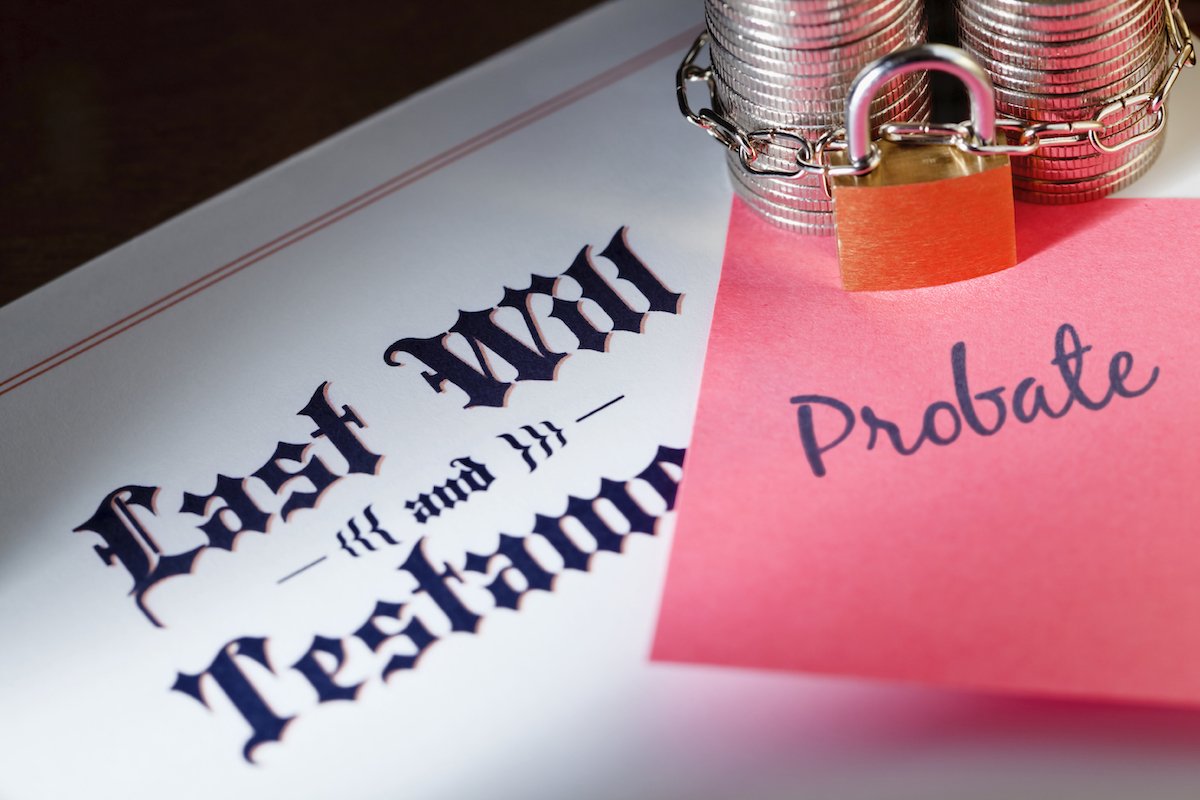
Once more into the archive of wonky wills, baffling bequests, and improbable inheritances. Our ongoing series continues with eight more examples of what happens when estate planning goes wrong — or simply goes sideways.
#1 – Tomas Martinez: The Millionaire Who Ran Away
Sixty-seven-year-old Tomas Martinez was living on the streets of Santa Cruz de la Sierra, Bolivia, when police officers approached him with good news: his ex-wife had died and left him her $6 million estate. Martinez, who had long struggled with drug and alcohol dependency, assumed the officers were there to arrest him. He fled before hearing what they had to say. He was never found. The inheritance was to pass to him from his ex-wife, Ines Gajardo Olivares, who bore him no apparent ill will for having abandoned her years earlier. Bolivian newspapers in 2000 described him as a “new millionaire paradoxically unaware of his fortune.”
#2 – The Peladi Brothers: From Cave to Castle
Brothers Zsolt and Geza Peladi were so destitute they lived in a cave outside Budapest, selling scrap metal for pennies. Their mother had severed ties with her own wealthy family and later abandoned her sons, so neither brother had any reason to expect a windfall. Then came the lawyers: their maternal grandmother had died in Baden-Württemberg, Germany, leaving a fortune estimated at £4 billion, to be divided among her direct descendants. Under German law, children automatically inherit from deceased parents, and the brothers — together with a sister living in America — found themselves sharing one of Europe’s largest private estates. “We knew our mother came from a wealthy family,” said Geza, aged 43, “but she was a difficult person.”
#3 – Sergey Sudev: The Journalism Student Millionaire
Journalism student Sergey Sudev had not seen his uncle for ten years. Evidently, however, he had made an impression: one day there was a knock at his door in the town of Komrat, Moldova — agents had tracked him down to inform him that his German uncle had just left him 950 million euros. “Is this a joke?” was his reported response. The inheritance made him one of the wealthiest men in Moldova, where the average monthly salary is approximately 270 euros.
#4 – Leona Helmsley: $12 Million for Trouble
New York hotelier Leona Helmsley left $12 million to her Maltese dog, Trouble — while cutting two of her grandchildren out of her Will entirely, “for reasons known to them.” Her remaining grandchildren were required to make regular visits to their father’s grave, signing a register to prove attendance, in order to receive their inheritance. The dog bequest was subsequently reduced by a court to $2 million — apparently even a New York judge has limits.
#5 – Carlotta Liebenstein: The $80 Million Canine Heir
When German countess Carlotta Liebenstein died in 1991, she left her entire $80 million estate to her dog, Gunther. Gunther’s descendants — through a series of trusts and clever investments managed by human trustees — are said to have grown the fortune considerably in the years since. It remains one of the most cited examples of a testamentary trust structured around a non-human beneficiary.
#6 – Ruth Lilly: $100 Million for a Rejection Letter
Pharmaceutical heiress Ruth Lilly spent much of her life submitting poetry to literary journals — and receiving polite rejections. In 2002, she pledged $100 million worth of stock to the Poetry Foundation, the publisher of Poetry magazine, which had once sent her a handwritten rejection note. One empathises with the editors who sent it.
#7 – Henry Budd: No Moustaches
In 1862, English gentleman Henry Budd left his substantial fortune to his two sons on a single condition: that neither of them ever grew a moustache. Mr Budd’s reasons for this requirement are not recorded, but one imagines they were deeply felt. The sons, one presumes, remained clean-shaven.
#8 – Bill Cruxton: The Loyal Waitress
In 1992, seventeen-year-old waitress Cara Wood worked at a restaurant in Chagrin Falls, Ohio. One of her regular customers was Bill Cruxton, a widower with no children, who ate there daily. Over time, she became not just his waitress but also helped him around the house and ran errands. When Cruxton died at age 82 in November 1992, his Will named Cara as the principal beneficiary of his estate — half a million dollars. No legal challenge was recorded.
It is important to remember that Wills can be challenged and that some testamentary directions will not be upheld by a court. In South Australia, if a Will is found to be invalid, the estate is distributed as if no Will existed — that is, according to the intestacy provisions of Part 4 of the Succession Act 2023 (SA). Eligible family members also have the right to make a Family Provision claim against the estate under the Succession Act 2023 (SA) if they have not been adequately provided for.
The human impulse to use one’s estate to make a statement, reward loyalty, or enforce unusual conditions is as old as the law of Wills itself. The law is more accommodating of eccentricity than many people imagine — provided the Will is properly made. Contact Genders and Partners if you would like to explore your options.
This article revised and updated 26 October 2026.
Want to Find Out More?
The remarkable cases above are a reminder that the law of Wills and estates is never dull. If you have your own estate planning intentions — however straightforward or unconventional — Genders and Partners are here to help you give them proper legal effect.
When it comes to Wills, Probate, Deceased Estates, asset protection and estate planning in Australia, you can trust the oldest law firm in South Australia – Genders & Partners – to guide you through the tough decisions to create the best solution for your individual needs.
If you have any questions or would like further information, or a quick phone call to discuss, book a timeslot for a free 15-minute phone consultation.
We can help you to protect yourself and your family. We look forward to being of service.
More Probate and Estate Planning Resources
All these and many more probate and estate planning topics are available for discussion with the oldest law firm in South Australia. Visit our articles page for further information.
DISCLAIMER: This article is intended as general information only and does not constitute legal advice. Succession law is complex and every situation is different. You should obtain advice from a lawyer who specialises in this area of law before making any decisions. The law referred to in this article reflects the position under the Succession Act 2023 (SA) as at the date of revision. Liability limited by a scheme approved under Professional Standards Legislation.
SPECIAL REPORT “7 Things You Must Know Before You Make Your Will”
In this report you will Learn:

Why home-made Wills can be a LOT more expensive than you might think.
The secret weapons used by the rich & powerful to protect their assets, and transfer their wealth two or three generations ahead.
How Estate and Trustee Companies make BIG money from “free” Wills.
The Most Common Estate Planning Mistakes, how they can cost your family a fortune, and How to Avoid Them.
The Elements of a Sound Estate Plan – why a Will alone is not enough.
How to Make Sure Your Assets Stay in Your Family and are not lost to creditors, lawsuits or ex-spouses.
How to guard against challenges to your Estate after you’re gone.