
For a business owner, the question ‘what happens to my estate when I die?’ is inseparable from the question ‘what happens to my business?’ The death of a business owner without a succession plan can destroy value that has been built over decades, trigger crippling disputes among partners or shareholders, leave employees without direction, and saddle the surviving family with an asset they cannot manage, cannot sell, and cannot afford to run.
Business succession planning is the process of ensuring that your business has a clear, documented path forward in the event of your death or incapacity — and that your estate plan is properly integrated with that path.
The Answer Depends on Your Business Structure
The legal consequences of a business owner’s death depend critically on how the business is structured.
If you operate as a sole trader, your business assets form part of your estate and pass under your Will. Your executor may have limited authority to continue operating the business in the interim, and if no buyer or successor has been identified, the business may need to be wound up — often at a fraction of its going-concern value.
If you operate in partnership, your death may dissolve the partnership depending on the terms of the partnership agreement. Without a buy-sell agreement, your estate may be entitled to a share of partnership assets but the surviving partners may not have the funds to pay out that share, potentially forcing a sale at an inopportune time.
If the business is operated through a company, your shares form part of your estate and pass under your Will. The company continues to exist, but effective control depends on who holds the shares — and your executor may lack the expertise to manage the business in the interim. Shareholders’ agreements must be reviewed for provisions affecting the transfer of shares on death.
If the business is held within a trust, the trust continues after your death but the trustee and appointor positions must be carefully managed. Your death may trigger changes in the trustee structure that affect control of the business.
The single most important thing a business owner can do is to ensure their personal estate plan and their business succession plan are prepared together, by advisers who communicate with each other.
Buy-Sell Agreements
A buy-sell agreement is a legally binding contract between co-owners of a business that governs what happens to a deceased owner’s interest. The agreement typically provides that the surviving owners must or may purchase the deceased’s interest from the estate at a pre-agreed or formula price. Buy-sell agreements bring certainty to the estate, protect the surviving owners’ ability to continue the business, and prevent unwanted parties from becoming involved.
Funding the Buyout — Life Insurance
A buy-sell agreement is only as effective as the mechanism for funding the agreed buyout price. The most common funding mechanism is life insurance held by the co-owners over each other’s lives, with policy proceeds used to fund the purchase of the deceased’s interest. The structure of the insurance arrangements has significant tax and succession implications that require specialist advice.
Incapacity Planning for Directors and Key People
Business succession planning should not focus exclusively on death. Prolonged incapacity through illness, injury, or cognitive decline can be equally disruptive. An Enduring Power of Attorney allows a trusted person to manage your personal financial affairs, but it does not automatically give them authority to act as a company director or to exercise rights as a trustee. Corporate documents must be reviewed to ensure adequate provision for incapacity.
Integrating Business Succession with Your Will
Your Will should be drafted with full knowledge of your business interests and the succession arrangements in place. Questions to address include: should your business interest be held in a testamentary trust on your death? Who has the skills and temperament to manage the business interest as trustee? Should the business be sold, and if so, who should authorise the sale and on what terms? A Will drafted without regard to the business may be technically valid but practically unworkable.
Conclusion
Business succession planning is not a luxury for large enterprises. Any business owner — whether a sole trader with a loyal client base, a professional in partnership, or a director of a family company — owes it to their family, their partners, and their employees to plan for the day they are no longer there. That planning starts with a conversation with a specialist succession lawyer.
Want to Find Out More?
If you would like further advice about business succession planning, or how to integrate your business interests with your estate plan, contact our friendly team.
When it comes to Wills, Probate, Deceased Estates, asset protection and estate planning in Australia, you can trust the oldest law firm in South Australia – Genders & Partners – to guide you through the tough decisions you must make for your family’s future care and welfare.
If you have any questions or would like further information, or a quick phone call to discuss, book a timeslot for a free 15-minute phone consultation.
We can help you to protect yourself and your family. We look forward to being of service.
More Business Succession and Estate Planning Resources
- FAQs
- Videos – Business Succession and Estate Planning
- Articles about Business Succession Planning
- Articles about Asset Protection and Estate Planning
- Articles about Testamentary Trusts
All these and many more business succession and estate planning topics are available for discussion with the oldest law firm in South Australia. Visit our articles page to explore our complete library of estate planning resources.
DISCLAIMER: This article is intended as general information only and does not constitute legal or financial advice. Business succession law is complex and the circumstances of each business and individual differ significantly. You should obtain specific legal, taxation, and financial advice from qualified practitioners before taking any action in relation to business succession planning. Genders and Partners accepts no liability for reliance on this article without such advice.
5 Common Dangers in Using DIY Kits
To access this infographic click Here
Rod Genders is a senior Australian lawyer specialising in trusts, Wills and estate planning, accident compensation, and probate and deceased estate administration in Adelaide and all over South Australia. His boutique specialist law firm, which was founded on 1848, is one of the oldest and most respected in Australia. Rod is also a prolific author and speaker. Some of his articles and books on Wills, Probate, Trusts, Estate Planning, Asset Protection and Retirement Planning may be found at www.genders.com.au.
Enjoy this article? Check out the full report containing “A Guide for Beneficiaries of a Deceased Estate in South Australia” from senior Australian lawyer Rod Genders.
FREE REPORT “Deceased Estates Simplified”
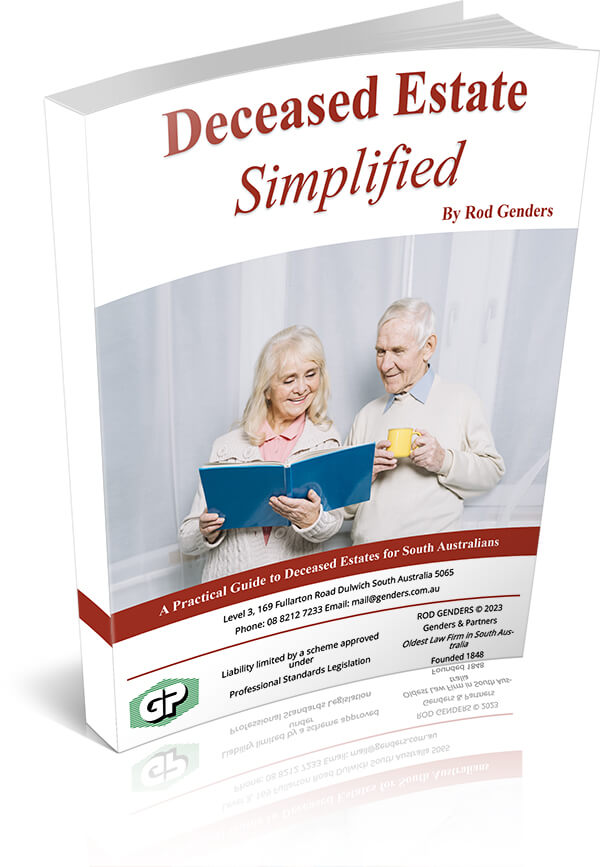
In this report you will learn:
- A simple, easy to understand explanation of the estate settlement process so you anticipate what’s to come and can plan your next steps.
- Detailed information on your duties and responsibilities as an Executor, Administrator or Personal Legal Representative of an estate.
- How to handle delicate situations with beneficiaries and dependents and what you can do to resolve conflict.
- What you need to do if the deceased did not have a will
- How to deal with personal effects, property, and taxes.