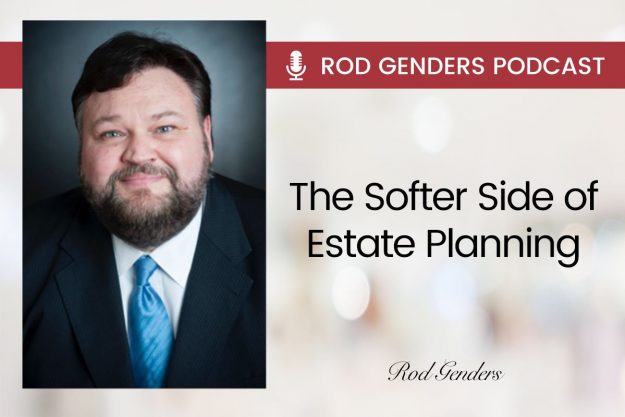
Rod Genders is a senior Australian lawyer specialising in Wills and Estate Planning, Probate and Estate Administration, Trusts and Guardianship and Inheritance Claims and Contested Estates in South Australia. His boutique specialist law firm, which was founded on 1848, is one of the oldest and most respected in Australia. Rod is an international author and speaker. Rod is the 3rd generation of Genders in the law and has been practising specialised law since the mid 80’s. He has acted as counsel or consultant to in excess of 50 other firms around Australia. Rod holds the SA state record for the highest ever personal injury award of damages, and has been involved in several of the largest personal injury claims in Australian legal history. For over 10 years he served on the Council of the Law Society of South Australia and is a senior member of its Succession Law Committee. Rod was a founding committee member of the South Australian branch of the London-based Society of Trusts and Estate Practitioners (STEP) for 8 years and was the founding Chair of the international STEP Digital Assets Special Interest Group. For over 25 years Rod has chaired a private committee enquiring into the affairs of protected persons. He is a member of the Law Council of Australia, and a member of its Succession and Elder Law Committee. Rod is one of only three Accredited Specialists in Wills and Estates law in South Australia, as recognised by the Law Society of South Australia.
An Executor is the person appointed in the Will of a deceased person with the lawful authority to administer the deceased estate.
An Executor has a special responsibility – known as fiduciary duty – to hold the estate in trust for the beneficiaries, and to act in the best interests of the estate.
Here are 7 things every Executor should do:
1.Consult a Senior Lawyer who Specialises in Deceased Estates
Unless the Will contains a specific direction, it’s up to the Executor to decide which lawyer to retain, but here’s a tip to keep in mind: A specialist lawyer will be faster and better for the estate and provide better protection for the Executor. Executors are performing a legal function, and there are hidden risks which can come back to bite the unwary Executor.
The longer we live, the better our scientists & doctors will become at improving our life-expectancies. Australia now has one of the highest life expectancies in the world (higher even than USA and UK). As a result we can expect to live longer but we must also expect to require increasing amounts of assistance in our later years.
We are likely to rely upon an increasing amount of care towards the end of our lives, and this care will be provided by people who will be in a position to influence us regarding testamentary gifts.
The role of carer can be quite an intimate one. Confidences can be shared; friendships are established. It becomes a “trust” relationship. However the potential inequality in the relationship (the reliance that is necessarily placed upon the stronger person by the weaker person in the relationship) creates a ready climate for exploitation.
Here we go again, with more Wacky Wills, Poisonous Probates and Dreadful Deaths. If you’re twisted like us, you might get a smile out of some of the strange stuff people do at the end of their lives …
#1 Wellington Burt
US lumber tycoon Wellington Burt died in 1919. His Will directed that most of his fortune be put into a trust fund, which would only pay out 21 years after his last surviving grandchild passed away.
His immediate heirs, who had expected to receive his fortune, saw very little of it. When the trust vested in 2010, a fortune of around $110m (£67.5m) was shared amongst 12 beneficiaries, none of whom ever knew the man.
Here’s another in our series of articles about Weird Wills, Problematic Probates and Disturbing Deaths. If you’re twisted like us, you might get a chuckle out of some of the strange stuff people do at the end of their time on this mortal coil …
1. I say Hello and you say Goodbye
Anthony Scott, in his last will and testament wrote: ‘To my first wife Sue, whom I always promised to mention in my will. Hello Sue!’
2. Proper Conditions
The last will and testament of Edith S of Walsall included £50,000 to each of her children, Roger, Helen and Patricia. Their inheritance was not to be spent on ‘slow horses and fast women and only a very small amount on booze’.
Even though death is a serious subject, our most popular series continues for your morbid enjoyment. This time we’ve collected some macabre stories of people finding ways to die that might provoke a chuckle.
#1 Too much sex and Viagra, makes Jack a dead boy
Sergey Tuganov made a bet with two female acquaintances in 2009 that he could continue to satisfy them sexually for 12 hours straight. They took the bet, and a wild night began. In order to be sure he would win, Sergey downed a whole bottle of Viagra pills before he set to work.
The Wills of famous celebrities can teach us some valuable lessons about what NOT to do….
… because our last posts Weird Probate Issues and More Weird Probate issues were so popular, we have decided to create an entire series …
The Bottom Line – Some people are determined to have their final say in their strange Last Wills and Testaments. Have a smile at their attempts to ‘rule from beyond the grave’.
… because our last posts Weird Probate Issues and More Weird Probate issues were so popular, we have decided to create an entire series …
1. Ingrid Newkirk
Ingrid Newkirk is the founder of People for the Ethical Treatment of Animals, the organization that tries to keep humans from eating, wearing or being mean to animals. When Newkirk passes on, she instructs that her corpse be given over to PETA, and then things get weird.
Famous Last Words – Some people try to tell you that “you can’t take it with you,” but that doesn’t mean you have to go quietly into the night. A vital part of pre-death planning is composing a Last Will and Testament that clearly lays out who gets your stuff and your money. But some people also use them as a final “screw you” to the world. These people were determined to have their final say, with their strange Last Wills and Testaments.
… because our last posts Weird Probate Issues and More Weird Probate issues were so popular, we have decided to create an entire series …
Another year has passed and 2018 is already here. The New Year is a time of optimism and noble resolutions to quit bad habits, get organised, pay off debt and save money. It’s a good time to take a look at your estate plan to make sure it is in place and up to date.
Your estate planning documents determine who will receive your property when you die, and also determine who has the right to make financial and major medical decisions during your lifetime. Getting your estate plan right will save money and heartbreak for you and your family.
Less than half of adult Australians have any estate planning documents in place and many of those people may have outdated documents. Documents that were created when you first got married or when your children were born may need updating years later, after your family and financial situation have changed entirely.
A long time ago (1983 actually), Sean Connery came out of 007 retirement to make an unofficial James Bond movie called Never Say Never Again. In one scene he pretends to be a masseur at a health spa, and suggestively says to Kim Basinger: “Hard or soft … massage?”
This movie-line must have stuck in my brain all these years, because it suddenly seemed like a good way to highlight some important considerations in modern integrated estate planning – Hard or soft … estate plan?
What is the Softer Side of Your Estate Plan?
Identify, document and share your wishes for end-of-life care, the care of your pets, the custodianship of your special assets, who your carers will be, where will you live if you lose your independence, and more.