Updated: 9 November 2026
By Rod Genders | Genders and Partners | Revised 9 November 2026

Separation and divorce are among the most significant events that can affect an estate plan, yet they are often the events people are least prepared to deal with. In the midst of a relationship breakdown, updating your Will and related documents can feel like the last thing on your mind – but delaying can leave a former partner with legal powers over your money, your medical treatment and even your children’s inheritance long after the relationship has ended.
Below is a practical checklist of the documents that usually need attention after a separation, along with why each one matters.
1. Your Will
Under the Succession Act 2023 (SA), which commenced on 1 January 2025 and consolidated South Australia’s succession law (replacing the former Wills Act 1936 (SA)), the effect of separation and divorce on an existing Will is a nuanced area. As a general rule, mere separation does not automatically revoke a Will or remove a former partner as executor or beneficiary – only a final divorce order can have that more limited effect on certain gifts and appointments, and even then not always in the way people expect.
The safest course is never to rely on the general law to fix this for you. If you are separated, or separation is likely, you should have a new Will prepared as soon as possible so that your assets pass to the people you actually want to benefit.
2. Powers of Attorney
An Enduring Power of Attorney, governed in South Australia by the Powers of Attorney and Agency Act 1984 (SA), authorises your appointed attorney to make financial and legal decisions on your behalf – including if you later lose capacity. If your former partner is still named as your attorney, they retain the ability to operate your bank accounts, sell property and manage your affairs unless and until you formally revoke the appointment and give written notice of that revocation to your former attorney and to relevant institutions such as your bank.
- Prepare a fresh Enduring Power of Attorney naming a trusted family member or friend.
- Revoke the old appointment in writing and notify your former partner and your financial institutions.
- Ask your former attorney to confirm, in writing, whether they exercised the power before the revocation took effect.
3. Advance Care Directives
Your Advance Care Directive, made under the Advance Care Directives Act 2013 (SA), records your wishes for future health care and appoints a Substitute Decision-Maker to speak for you if you cannot speak for yourself. Marriage or divorce does not automatically update this document. If your former partner remains listed, they may retain the legal authority to make decisions about your medical treatment and living arrangements. A new Advance Care Directive naming someone you currently trust should be a priority.
4. Superannuation Death Benefit Nominations
Superannuation does not automatically form part of your estate and is not governed by your Will unless you direct it there. If you have a binding death benefit nomination in place naming your former partner, that nomination will generally continue to apply until you change it – regardless of what your divorce settlement says. Given that superannuation is often one of the largest assets a person owns, checking and updating this nomination should not wait.
5. Life Insurance Beneficiaries
Just as with superannuation, a life insurance beneficiary designation is a separate legal instrument from your Will. Many people assume a divorce settlement automatically deals with this – it does not. Contact your insurer directly to update the nominated beneficiary.
6. Guardianship of Minor Children
If you have young children, your Will should nominate a testamentary guardian to step in only if both parents become unable to care for the children. This nomination is not a substitute for the surviving parent’s automatic rights, but it is taken seriously by the Family Court as a clear expression of your wishes, particularly where you have concerns about your former partner’s parenting capacity or a new partner’s role in your children’s lives.
7. Jointly Held Assets
Property held as joint tenants passes automatically to the surviving joint owner on death, regardless of what your Will says. If you own your home or other assets jointly with a former partner, you may need to consider severing the joint tenancy so that your share instead forms part of your estate and passes under your Will.
8. Binding Financial Agreements
If you are entering a new relationship, or remarrying, a Binding Financial Agreement can be used to protect assets for your children from an earlier relationship. These agreements can be prepared at any stage of a relationship, including before a wedding, during a relationship, or even as part of separating from a previous partner.
A Complete Overhaul, Not a Quick Fix
Separation and divorce usually call for a complete review of your estate planning documents, not a single quick amendment. Genders and Partners has decades of experience helping South Australians update their Wills, powers of attorney, advance care directives and related documents after a relationship breakdown, so that their true wishes – not outdated arrangements – are the ones that count.
Want to Find Out More?
If you have questions about estate planning after separation or divorce, or would simply like to talk through your own circumstances, Genders and Partners is here to help.
When it comes to Wills, Probate, Deceased Estates, asset protection and estate planning in Australia, you can trust the oldest law firm in South Australia – Genders & Partners – to guide you through the tough decisions to create the best solution for your individual needs.
If you have any questions or would like further information, or a quick phone call to discuss, book a timeslot for a free 15-minute phone consultation.
We can help you to protect yourself and your family. We look forward to being of service.
More Separation and Divorce Estate Planning Resources
- FAQs – Wills and Estate Planning
- FAQs Videos
- Estate Planning After Relationship Breakdown
- Planning for Blended Families
- Enduring Powers of Attorney in South Australia: Choosing the Right Person to Manage Your Affairs
All these and many more estate planning after separation or divorce topics are available for discussion with the oldest law firm in South Australia. Browse further articles on our Adelaide Lawyer Blog.
This article revised and updated 9 November 2026.
Disclaimer: This article provides general information only about estate planning in South Australia and is not legal advice. Every family law and estate planning situation is different, and you should obtain advice from a qualified lawyer before acting or relying on anything in this article.
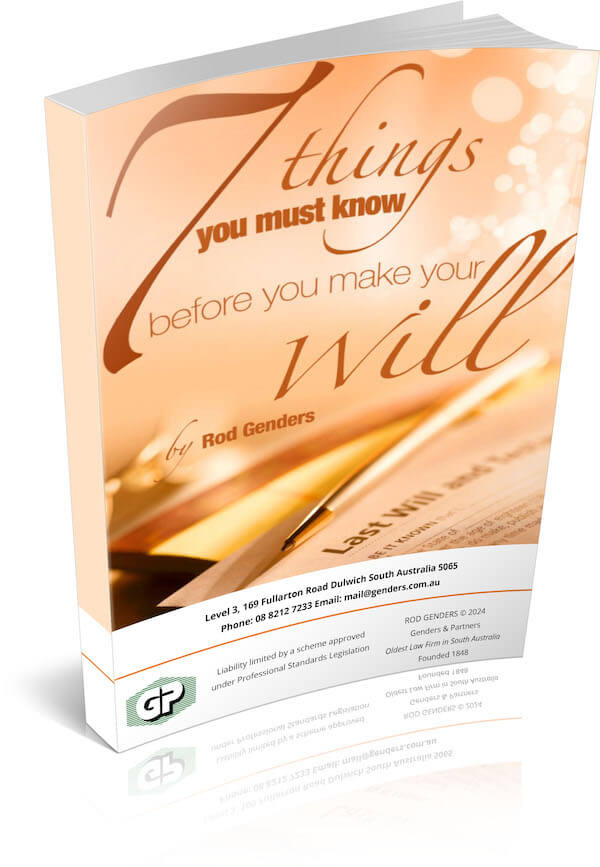
SPECIAL REPORT “7 Things You Must Know
Before You Make Your Will”
In this report you will Learn:
Why home-made Wills can be a LOT more expensive than you might think.
The secret weapons used by the rich & powerful to protect their assets, and transfer their wealth two or three generations ahead.
How Estate and Trustee Companies make BIG money from “free” Wills.
The Most Common Estate Planning Mistakes, how they can cost your family a fortune, and How to Avoid Them.
The Elements of a Sound Estate Plan – why a Will alone is not enough.
How to Make Sure Your Assets Stay in Your Family and are not lost to creditors, lawsuits or ex-spouses.
How to guard against challenges to your Estate after you’re gone.