choices-300x260.jpg

Wills and Estate Planning Adelaide: The Right to Choose – Live or Die

The Right to Choose – Live or Die

Do you have strong feelings about what should happen at the end of your life?

You are not alone.

Around Australia in the last 15 years there have been several legislative attempts to create a framework for assisted suicide and voluntary euthanasia, and there have recently been Bills before the parliaments in both South Australia and Western Australia upon this issue.

In 1995, the Northern Territory of Australia became the first place in the world to pass right to die legislation. The Rights of the Terminally Ill Act lasted 9 months before being overturned by the Australian Federal Parliament. At present, voluntary euthanasia and assisted suicide are illegal in all states and territories of Australia; however the pressure is growing for change.

There are already places in Europe and in the USA where the laws permit degrees of voluntary euthanasia.

Of course this is a sensitive and controversial topic, provoking extreme reactions among people.  It touches upon some of the same issues as Capital Punishment and Abortion.

For some, the sanctity of human life is paramount, and for them religious beliefs prevent any suggestion of termination of life.  This group might be called the “Right to Life” group.

genders-and-partners-logo.png

Wills and Estate Planning Adelaide: SKI and Estate Planning

Are you familiar with the term SKI ? It stands for Spending Kids’ Inheritance.

A wealthy & successful businessman of my acquaintance claims that his estate plan consists of spending everything to such effect that his final cheque (to the funeral director) bounces.

Here are some reasons why you may receive a smaller than expected inheritance:

1. Your parents are spending it all. Not intentionally maybe, but with the high cost of living, medical care, and long term care, their nest eggs may not be what they used to be. Nursing home costs can run as high as $80,000 a year or higher in some facilities and long term health care may be too expensive.

2. We are living longer than ever, and as we live longer, we consume more of our wealth.  Australians now enjoy nearly the highest life expectancies (on average) in the world – significantly higher than even the UK and USA.  However this means that the duration of our elder care is longer; the amount of care required is greater; and the costs of such care grow ever higher.

3. Medical science continues to uncover treatments for once-fatal illnesses.  When coronary artery disease or cancer strikes, our survival rates today are many times higher than they were just 20 years ago.  However the cost & complexities of many new treatments & medications can erode even the largest savings.

4. Baby boomers come from families that were larger than today’s families. Parents of children born between 1946 – 1964 had an average of 3.5 children, thus leaving a smaller piece of the pie to be inherited by each child.

mining-199x300.jpg

Wills and Estate Planning Adelaide: Glass Ceilings, Black Holes, Budget Deficits & Estate Plans

Glass Ceilings, Black Holes, Budget Deficits & Estate Plans

Australia now has its first female Prime Minister.  The glass ceiling has at last been shattered.  But what does this mean for the federal budget, and how might this affect your estate planning?

Bear with me for a minute, as we explore some of the possibilities.

That the new PM is female is largely irrelevant to these considerations.  But the change of Prime Minister allows the government to distance itself from some of the more unpopular policies of the outgoing PM Kevin Rudd, notably the Mining Tax.

The 40 per cent resource super profits tax – known as the Mining Tax – was the single biggest tax impost since the introduction of the GST.

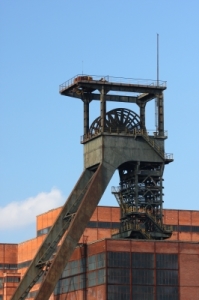
This new tax on mining profits was supposed to be worth up to $12 billion a year, and was the government’s funding mechanism to boost the retirement savings of workers, lower business taxes and build infrastructure – while still leaving room for the other $2.6 billion in election promises.