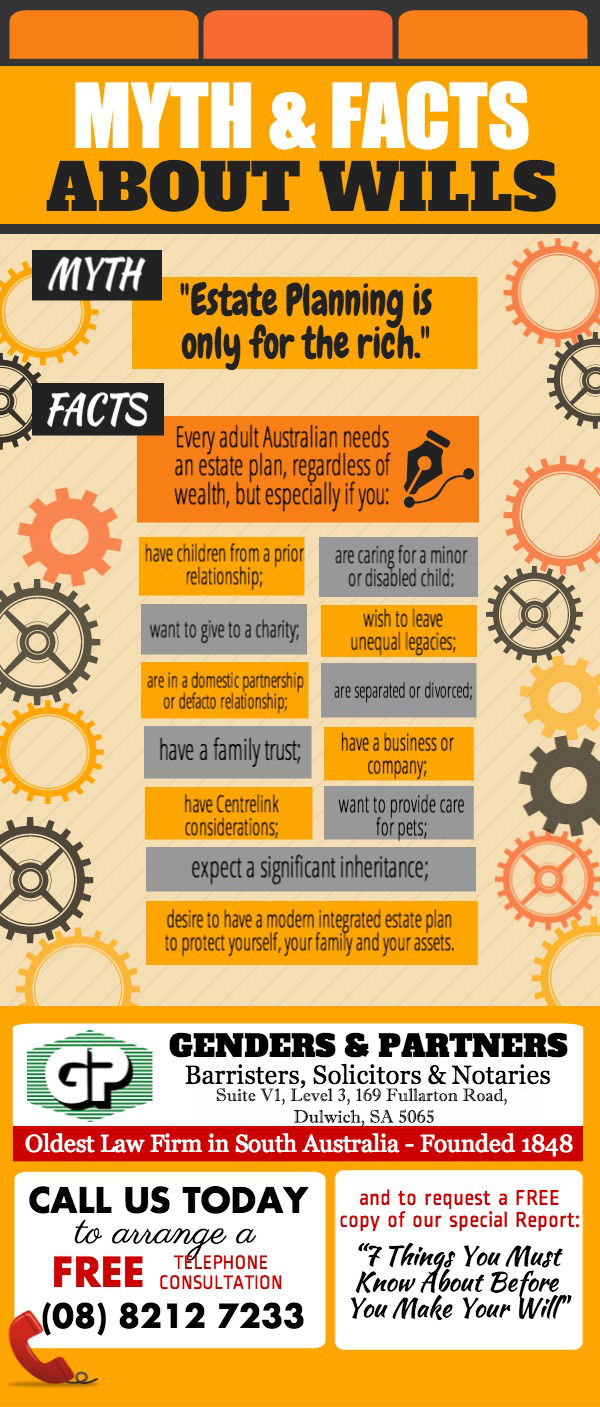
One of the most persistent — and most costly — misconceptions about estate planning is that it is an activity reserved for the wealthy. The reality is considerably more democratic: if you are over eighteen years of age and have any assets whatsoever, you need a Will.
You May Have More Than You Think
Most Australians significantly underestimate the total value of their estate. Consider what you actually own:
- Superannuation: Most employed Australians accumulate superannuation throughout their working lives. Many super funds also carry a life insurance component, sometimes of substantial value, of which the member may be only dimly aware.
- A motor vehicle, household contents, jewellery, and personal effects — even modest collections can carry significant sentimental and monetary value.
- A bank account or term deposit, even one with a modest balance.
- A share portfolio, managed funds, or cryptocurrency holdings.
- A share in a family home or investment property, even if mortgaged.
Added together, these assets can easily constitute a significant sum — a sum that, without a valid Will, may not pass to the people you intend.
What Happens if You Die Without a Will?
Dying without a valid Will is called dying intestate. Under the Succession Act 2023 (SA), the intestacy rules provide a statutory order of priority for distributing your estate. Your assets will be distributed according to a fixed formula — to your spouse or domestic partner, then to children, then to other relatives in a prescribed order — regardless of your actual wishes.
This can produce results that would surprise or dismay you. For example:
- A long-term de facto partner may receive less than they would under a properly drafted Will, or may be required to share the estate with your children from a previous relationship.
- A close friend, charity, or godchild who you would have wished to remember in your Will will receive nothing.
- Your estate may be subject to extended administration, increasing delay and cost for your family.
Wills Are More Affordable Than You May Expect
Many people postpone making a Will in the belief that it will be expensive. In practice, the cost of having a professionally prepared Will is comparable to the fee for having a tax return prepared. Unlike a tax return, a well-drafted Will does not need to be reviewed every year — only when your circumstances change significantly.
Where a husband and wife (or domestic partners) prepare their Wills together at the same time, firms such as Genders and Partners are frequently able to offer a combined fee that represents excellent value.
The cost of not having a Will — measured in family conflict, contested estates, court proceedings, and the distribution of assets to the wrong people — vastly exceeds the cost of a professional estate plan.
Estate Planning is for Every Life Stage
Estate planning is not a single event undertaken once in a lifetime. It is an ongoing process that should be revisited whenever your circumstances change. Key life events that should prompt a review include:
- Turning eighteen (at which point you have legal capacity to make a Will)
- Marriage or entering a domestic partnership
- The birth or adoption of children or grandchildren
- Separation or divorce
- Acquiring significant assets (a home, an inheritance, a business interest)
- Changes to your superannuation or life insurance arrangements
- The death of a named executor or beneficiary
Under the Succession Act 2023 (SA), marriage after the date of a Will does not revoke it — a significant change from the prior law. Conversely, a decree absolute of divorce revokes any appointment of a former spouse as executor or beneficiary, unless the Will clearly indicates that the gift is to survive divorce. These and other provisions of the 2023 Act make professional legal advice indispensable.
Protecting Those Who Depend on You
For parents of minor children, a Will is not merely convenient but urgent. A Will allows you to nominate a testamentary guardian for your children — the person who will care for them if both parents die — and to establish a testamentary trust that manages their inheritance until they reach an appropriate age. Without these provisions, the courts will decide who cares for your children and how their inheritance is managed.
Want to Find Out More?
If this article has prompted you to consider reviewing or making your Will, Genders and Partners — Adelaide’s oldest law firm — can assist you. A Will is an investment in the wellbeing of everyone you care about.
When it comes to Wills, Probate, Deceased Estates, asset protection and estate planning in Australia, you can trust the oldest law firm in South Australia – Genders & Partners – to guide you through the tough decisions to create the best solution for your individual needs.
If you have any questions or would like further information, or a quick phone call to discuss, book a timeslot for a free 15-minute phone consultation.
We can help you to protect yourself and your family. We look forward to being of service.
More Wills and Estate Planning Resources
- Wills and Estate Planning FAQs
- Myths About Wills
- Debunking 3 Common Myths About Living Wills in Adelaide
- Estate Planning Disasters of the Rich and Famous
- The Critical Importance of Making a Will
All these and many more related topics are available for discussion with the oldest law firm in South Australia. Visit the Genders and Partners article library for further reading.
DISCLAIMER:
This article provides general information only and does not constitute legal advice. The law referred to is that of South Australia, with principal reference to the Succession Act 2023 (SA) (commenced 1 January 2025). Individual circumstances vary; readers should obtain advice from a qualified legal practitioner before acting on the information contained in this article.
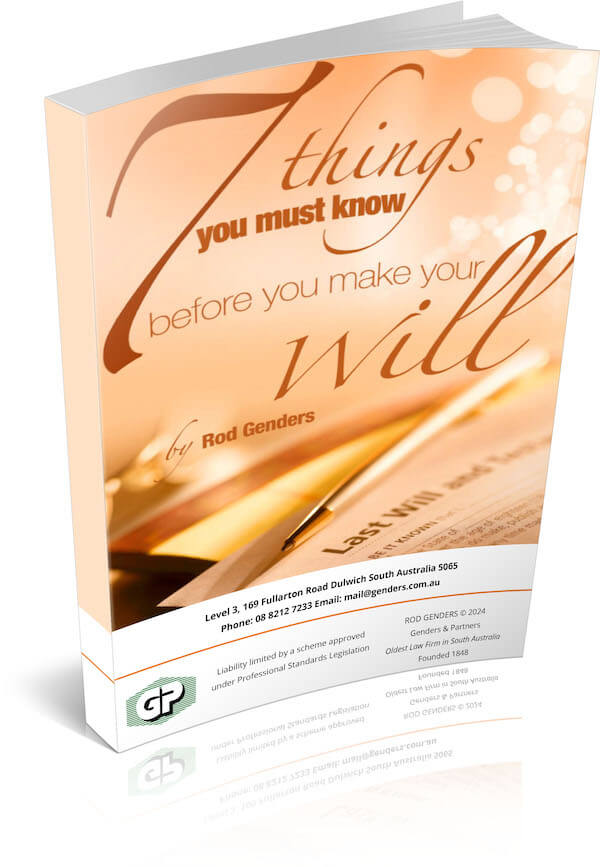
SPECIAL REPORT “7 Things You Must Know Before You Make Your Will”
In this report you will Learn:
Why home-made Wills can be a LOT more expensive than you might think.
The secret weapons used by the rich & powerful to protect their assets, and transfer their wealth two or three generations ahead.
How Estate and Trustee Companies make BIG money from “free” Wills.
The Most Common Estate Planning Mistakes, how they can cost your family a fortune, and How to Avoid Them.
The Elements of a Sound Estate Plan – why a Will alone is not enough.
How to Make Sure Your Assets Stay in Your Family and are not lost to creditors, lawsuits or ex-spouses.
How to guard against challenges to your Estate after you’re gone.